
About Govind Devji Temple
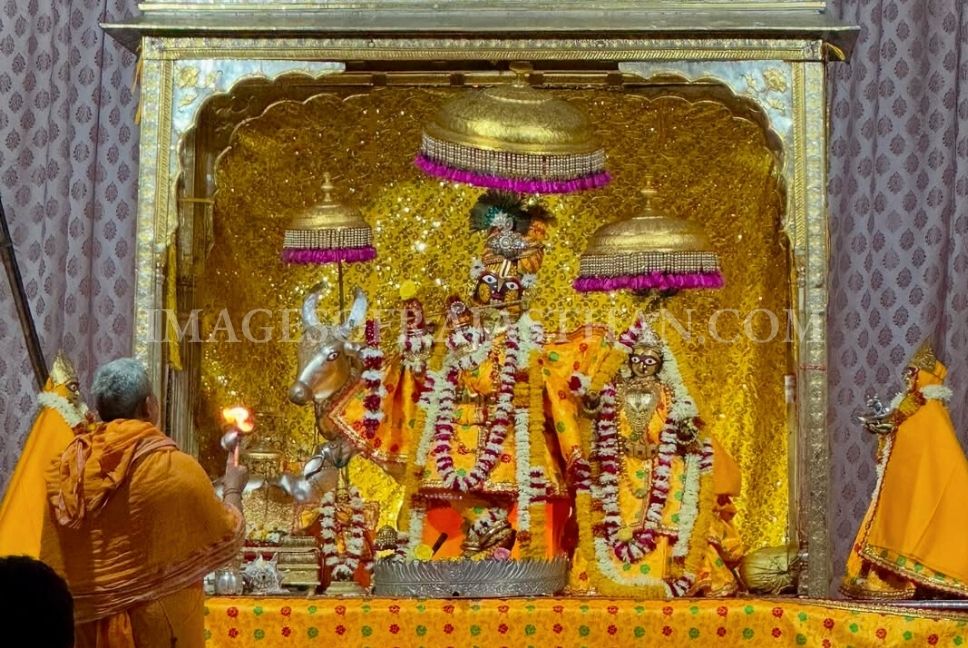
The Govind Dev Ji Temple is a profoundly sacred and historically significant Hindu temple dedicated to the divine couple, Radha and Krishna located majestically within the glorious confines of Jaipur’s iconic City Palace complex, specifically nestled between the Badal Mahal and Chandra Mahal. This enchanting sanctuary built in the 18th century was established by Maharaja Sawai Jai Singh II, the visionary founder of Jaipur who brought the highly revered deities from Vrindavan, the legendary site of Lord Krishna’s childhood thereby making the Govind Dev Ji one of the most revered Krishna temples outside of Vrindavan itself. The temple is a spiritual and cultural beacon holding immense importance for the followers of the Gaudiya Vaishnav tradition and the main deity, the idol of Govind Dev Ji is steeped in captivating legend: it is traditionally believed to have been exquisitely crafted by Bajranabh, the great-grandson of Lord Krishna, who created three images of Krishna—one representing his feet (Lord Madan Mohan Ji), one his chest (Gopinath Ji), and this one, Govind Dev Ji, representing his face, an image Bajranabh’s grandmother guided him to sculpt to resemble Krishna’s actual human form.
Historically, this sacred Bajrakrit idol was lost to time before being rediscovered in 1525 A.D. by the devotee Rupa Goswami and was later secretly moved from Vrindavan to Amer, and subsequently to its current location in Jaipur, to protect it from the religious fanaticism of Mughal Emperor Aurangzeb. The temple’s architecture while featuring Rajput craftsmanship such as rose-hued spires and domes is a compelling fusion of Hindu Rajput and Islamic Mughal styles, a reflection of the era’s cultural intermingling; yet, it exhibits unique characteristics such as the deliberate lack of a traditional porch and shikhara (spire), a structural choice unique to temples built by Jai Singh. The idol of Lord Krishna is enshrined in a rectangular hall surrounded by an arcaded procession with a flat, decorated ceiling, a unique open design symbolic of the king’s wish for everyone including commoners to have clear darshan (sight of the deity) from far distances. This expansive area includes the famed Satsang Hall (prayer hall), which was recognized by the Guinness Book of World Records for having the widest single-span RCC flat roof.
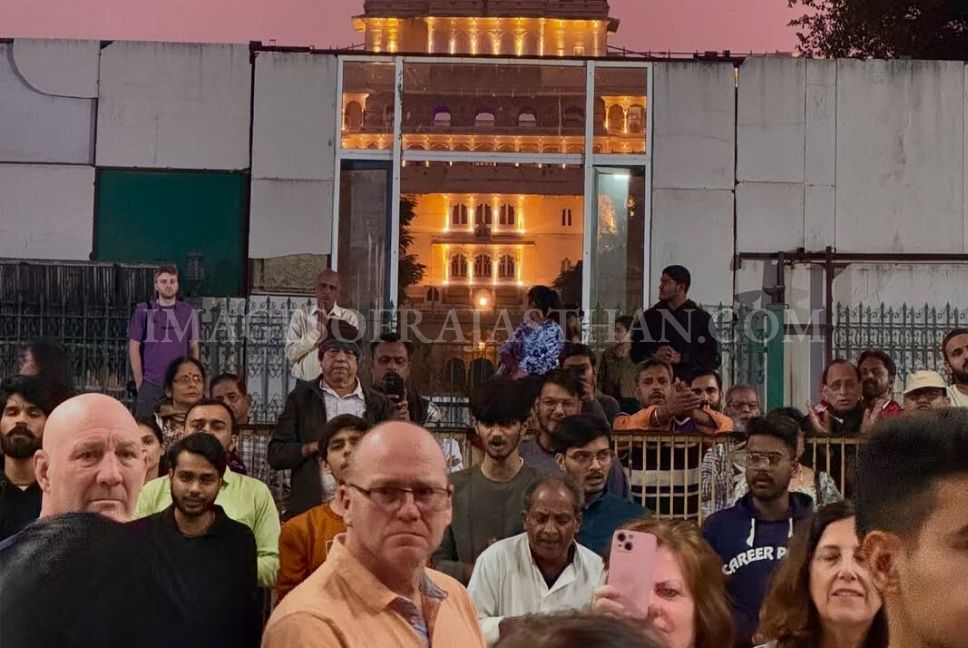
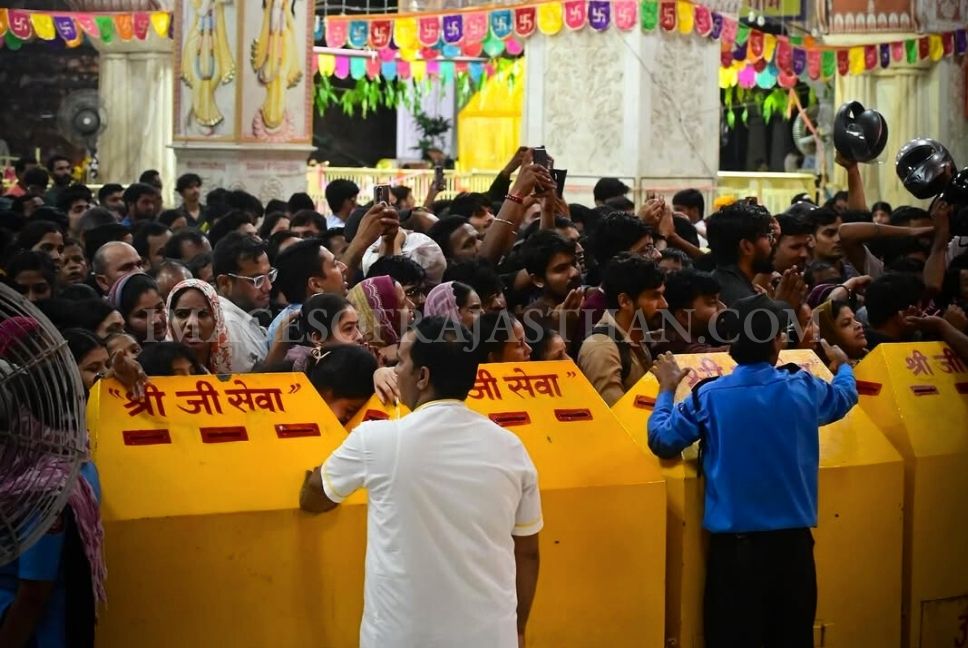
The temple is not just a site of historical worship but a vibrant living center of devotion conducting daily rituals that include seven aartis (ritualistic prayers) and bhog offerings at specific times throughout the day drawing thousands of devotees to bask in its divine aura and receive blessings. The ceiling of the inner sanctum is often cased with gold and the presence of delicate chandeliers adds to the overall decadence, while the hallowed halls are often adorned with portraits depicting Indian art and scenes of Krishna Leela (divine pastimes). The temple also holds historical significance in the Gaudiya Vaishnav tradition as the site where the eminent philosopher Baladeva Vidyabhushana composed the Govinda Bhashya a critical commentary on the Brahma Sutras, after reportedly receiving divine guidance from the deity Govind Dev Ji in a dream. Major Hindu festivals such as Janmashtami (Krishna’s birth anniversary), Radhashtami and Holi are celebrated on a grand scale, when the temple is thronged by massive numbers of devotees and the serene surroundings, which include spectacular gardens and courtyards, contribute to a powerful, calming environment, making the Govind Dev Ji Temple a compelling spiritual and cultural destination.

Quick Overview
The Govind Dev Ji Temple is one of Jaipur's most sacred sites, nestled within the City Palace complex. Established by Maharaja Sawai Jai Singh II, it houses the ancient idol of Lord Krishna, believed to resemble his original face, crafted by his great-grandson. The temple is an architectural blend of Rajput and Mughal styles, featuring a unique open hall design for clear darshan. A spiritual hub, it hosts seven daily aartis and is central to the Gaudiya Vaishnav tradition, attracting massive crowds during festivals like Janmashtami.