
About Isar Lat (Sargasuli)
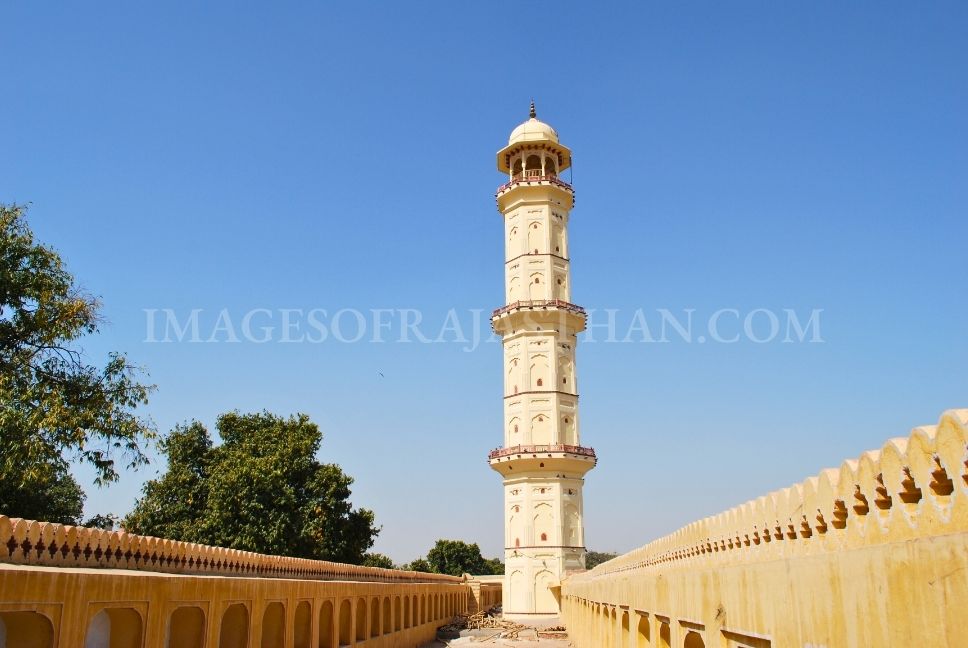
The Sargasuli Tower, also famously known as the Isar Lat is a majestic victory tower that has stood sentinel tall and octagonal in the middle of the Pink City of Jaipur since 1749 serving as a powerful and highly visible symbol of the triumph of Maharaja Sawai Ishwari Singh, the eldest son and heir apparent of the city’s founder, Maharaja Sawai Jai Singh II. This impressive monument was commissioned by Ishwari Singh specifically to commemorate his glorious and hard-fought victory at the pivotal Battle of Rajmahal which took place in March 1747, against the combined formidable armies of his rival half-brother, Sawai Madho Singh, and his powerful allies, including the Maharana Jagat Singh of Mewar and the formidable Maratha mercenaries under Khanderao Holkar. The deep historical context of the tower stems from the bitter dynastic rivalry between the two step-brothers, a conflict rooted in a complex treaty signed by Maharaja Sawai Jai Singh II with the Maharana of Mewar before marrying his second wife, promising the throne to the son of the Sisodia Princess, a promise that complicated the traditional Kachwaha succession of the elder son, Ishwari Singh.
When Ishwari Singh succeeded the throne according to tradition, Madho Singh, supported by his uncle, Maharana Jagat Singh initiated a revolt to claim the throne based on the signed treaty leading to years of discord, a short-lived peace settlement where Madho Singh received no lands and eventually the decisive Battle of Rajmahal. To celebrate his complete defeat of Madho Singh’s forces after a fierce two-day war, Ishwari Singh commissioned the construction of this tower—the tallest structure in Jaipur at the time—to publicly display his power, right to rule and military victory, naming it Isar Lat though it quickly became popularly known as Sargasuli, which literally translates to “Passage to Heaven.” The 140-foot (about 42 meters) high minaret designed and constructed by the royal craftsman Ganesh Khowan, draws inspiration from other renowned Indian monuments like the Qutub Minar in Delhi and the Kirti Stambh (Tower of Fame) in Chittorgarh, reflecting Ishwari Singh’s appreciation for their grand designs and structures. Architecturally, the Sargasuli is a fine example of a successful blend of Mughal and Rajput architectural styles put together following all the rules of Vastu Shastra and is distinctly coloured in a rich yellow that provides a calculated and attractive contrast to the dominant pink color that characterizes the surrounding historic buildings and bazaars.
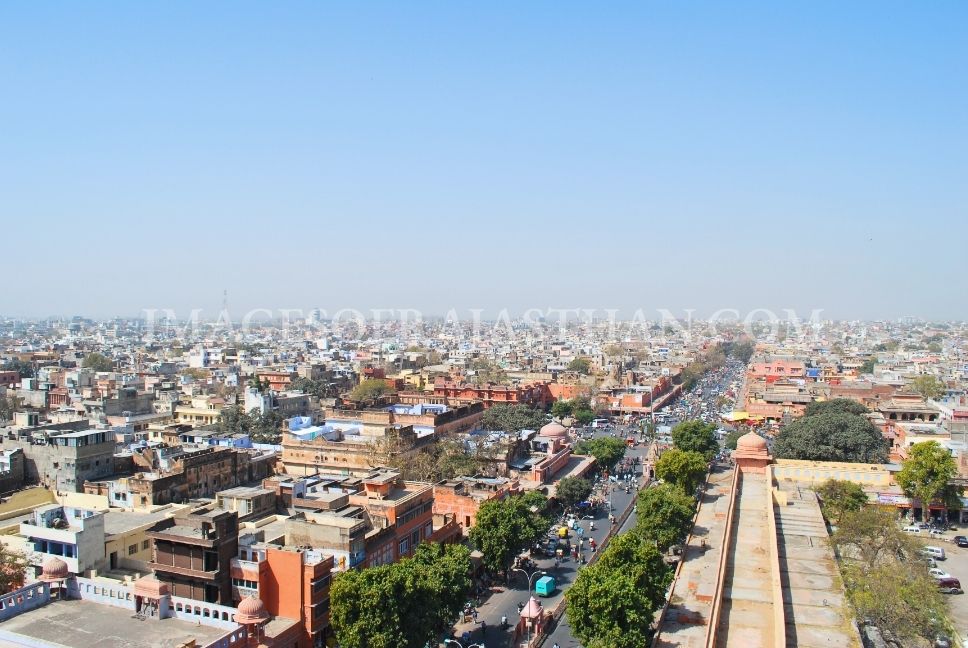
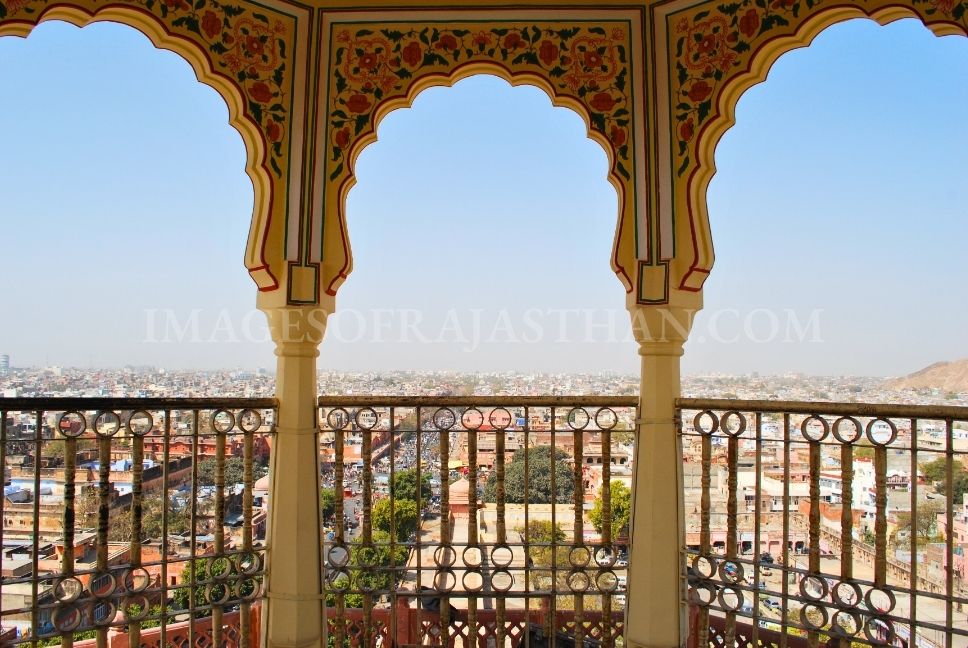
The tower is built as a seven-storeyed octagonal structure with each of its seven floors featuring a balcony outlet and line of windows providing external architectural symmetry and internal cross-ventilation. Visitors can access the top via a narrow circular spiral staircase consisting of approximately 264 steps a climb designed with cross-section work to allow an inlet of fresh air and light. Due to its impressive height and central location—situated in the bustling Aatish market, at the intersection of Tripolia Bazar and Gangori Bazar near Choti Chaupar Chowk and the historic Tripolia Gate—the Sargasuli Tower was later used as an effective watch tower and today offers a breathtaking comprehensive 360-degree panoramic vista of the entire Pink City below. From its pinnacle visitors can easily spot and identify Jaipur’s most prominent landmarks and monuments including the distant Nahargarh Fort, the iconic Hawa Mahal, the City Palace, Jantar Mantar, Garh Ganesh, the Royal Gaitore and the Charan Mandir, thereby physically connecting the tower’s historical significance to the broader urban landscape founded by Ishwari Singh’s father.
Quick Overview
The Sargasuli Tower, or Isar Lat, is a 140-foot octagonal victory tower built in 1749 by Maharaja Sawai Ishwari Singh. It commemorates his victory over his half-brother, Madho Singh, at the Battle of Rajmahal. Located strategically in the heart of the old city's bazaar intersection, the seven-storey minaret blends Rajput and Mughal architecture. Its name means "Passage to Heaven," signifying the Maharaja's triumph. Visitors can climb the 264 steps to the top for a comprehensive, panoramic view of Jaipur's major landmarks, including Nahargarh and Hawa Mahal.