About Albert Hall Museum
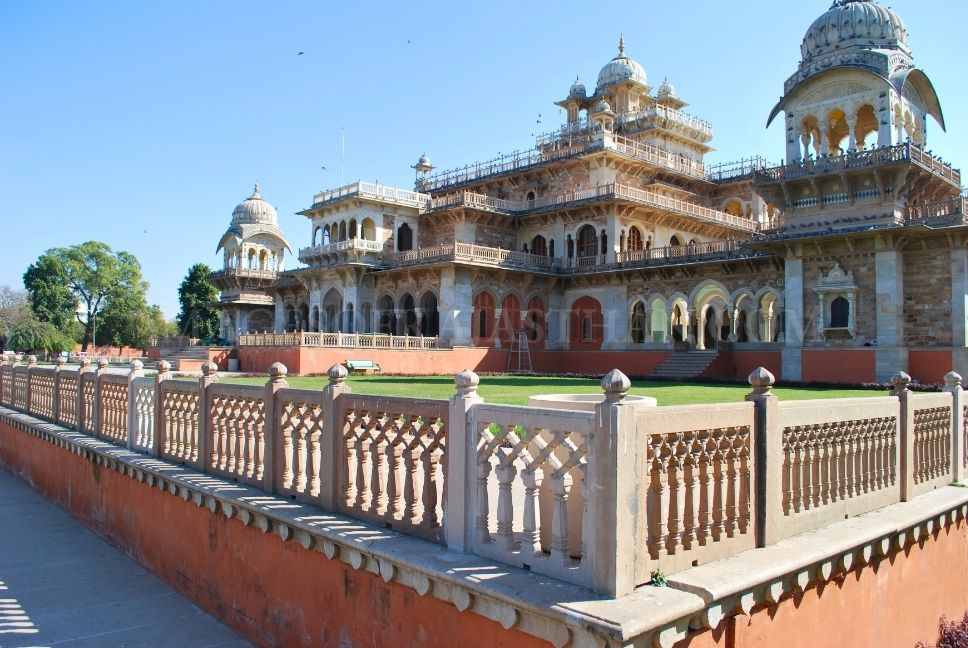
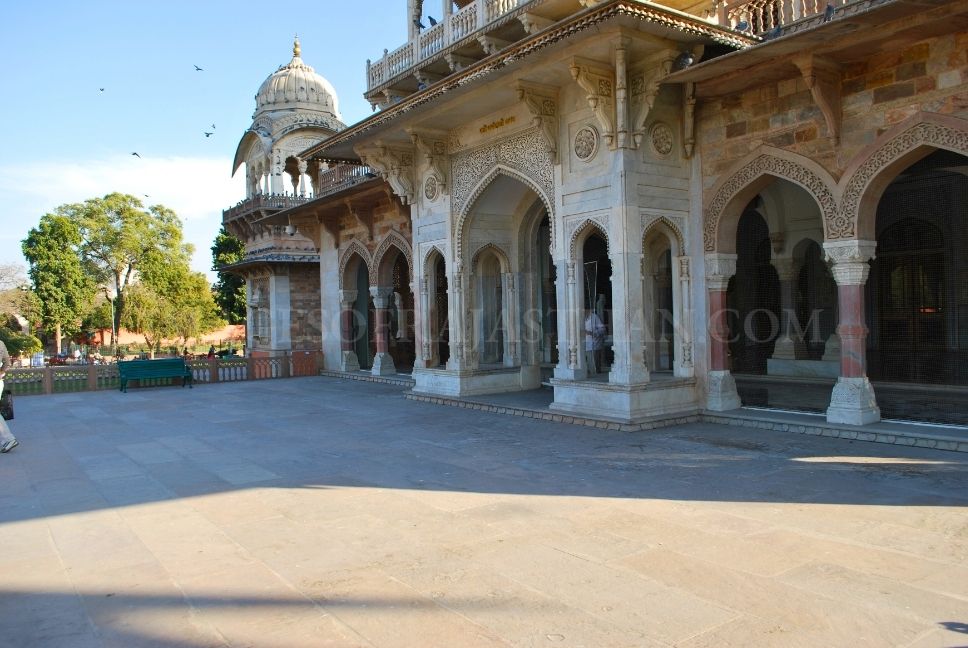
The Albert Hall Museum, serving as the official State Museum of Rajasthan and proudly holding the title of the state’s oldest museum is a magnificent architectural and cultural landmark situated within the expansive Ram Niwas Garden, positioned outside the city wall opposite the New Gate. This imposing structure also known officially as the Government Central Museum is a fine and quintessential example of the Indo-Saracenic revival style of architecture, blending the finest elements of traditional Indian, Islamic and Gothic architectural styles with graceful Rajput influence, making it one of the best 19th-century museums for its sheer variety and grandeur. The building’s foundation stone was symbolically laid by Albert Edward (King Edward VII), the Prince of Wales, during his visit to the city on February 6, 1876 and the edifice itself was masterfully designed by the British engineer Samuel Swinton Jacob, with assistance from Mir Tujumool Hoosein, eventually opening to the public in 1887. Although Maharaja Ram Singh II initially envisioned the structure as a town hall, his successor, Maharaja Sawai Madho Singh II, decided it should instead function as a museum for the industrial art and craftsmanship of Jaipur, incorporating it into the new Ram Nivas Garden complex.
The majestic multi-arched facade constructed from marble and stone, is adorned in a captivating pink hue that perfectly complements the historical city with the entrance guarded by a pair of stately stone elephants leading into a spacious courtyard featuring a soothing fountain. The museum’s superb and exhaustive collection, which now numbers around 20,000 artifacts, is largely the result of the vision, inspiration and rigorous efforts of the Maharajas and Colonel Tomas H. Hendley who served as the curator and was given the specific responsibility of putting together a collection that would both preserve local skills and showcase the best craftsmanship of other places for the people of Jaipur. Hendley’s efforts grew out of an industrial crafts collection he had meticulously put together for the grand Jaipur Exhibition of 1883 and he was a pioneer in museum practices, introducing the appointment of guides and demonstrators to conduct informed tours, and in consideration of the widespread purdah (veil) practice for women in the princely state, he innovatively reserved every Friday exclusively for women visitors. Today, the repository is divided into 16 expansive galleries, housing a rich and diverse collection of objects that span centuries and continents, including miniature paintings, jewelry, carpets, ivory, stone, metal sculptures, works in crystal and a large, varied pottery collection featuring exquisite samples from India and the oriental and western world.
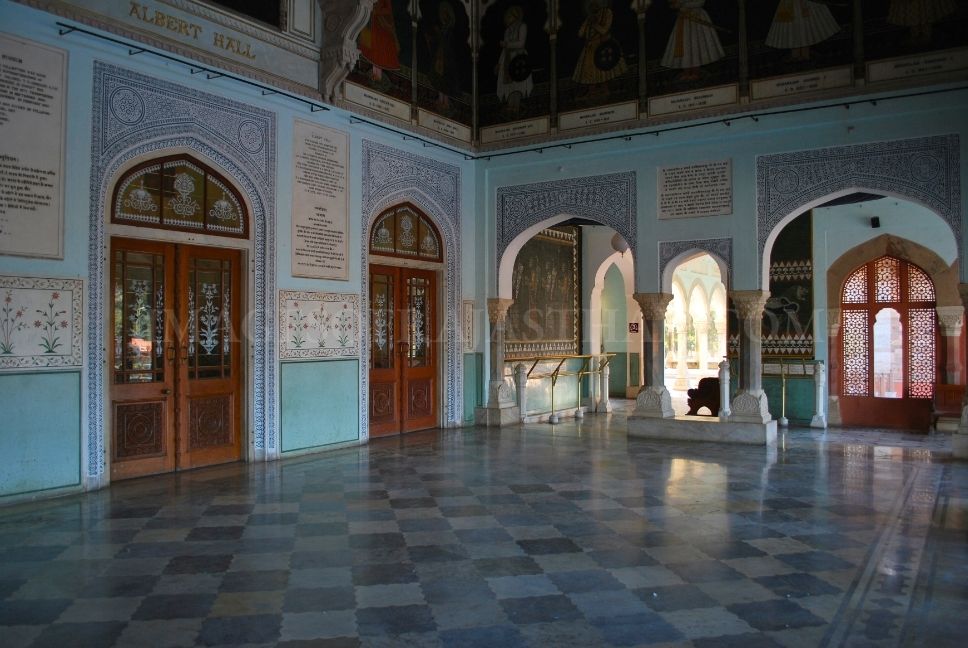
The museum’s most famous and popular attraction is undoubtedly the sarcophagus of an Egyptian Mummy, which is preserved in a glass case, though other covetable treasures include the rare 17th-century Persian Garden Carpet, ancient sculptures, a wealth of arms and armour and a collection of coins from the Gupta, Kushan, Delhi Sultanate, Mughal and British periods. The intricate architecture extends to the interior walls, which are painted with mesmerizing murals and colourful frescoes: the outer walls depict scenes from ancient civilizations (Babylonian, Chinese, Greek), while the courtyard’s upper section features extracts from major religious texts, including the Quran, the Bible and Indian epics. Notably, six scenes from the Mahabharata and Ramayana are depicted in colorful paintings, copied by 19th-century copyists from the Razmnama, the Persian translation of the Mahabharata manuscript from the 16th century. Rudyard Kipling, upon visiting, succinctly expressed a scholarly appreciation for the museum, noting in 1885 that “Every foot of it, from the domes of the roof… was worth studying.” The museum, which was successfully renovated in 2008, continues to enchant visitors during the day and unveils its most captivating feature at nightfall, when it comes alive in a mesmerizing display of vibrant colourful lights that illuminate its grandeur against the Jaipur sky offering visitors a holistic journey through Rajasthan’s diverse cultural heritage.
Quick Overview
The Albert Hall Museum, Rajasthan's oldest museum and a striking Indo-Saracenic marvel, is located in Jaipur's Ram Niwas Garden. Designed by Samuel Swinton Jacob and opened in 1887, it was commissioned to house the region's industrial arts and crafts. The museum boasts 16 galleries with diverse collections, including arms, pottery, ancient sculptures, and a rare Persian Garden Carpet. Its primary attraction is a centuries-old Egyptian mummy, drawing thousands of visitors annually. The building is famed for its exterior murals and intricate interiors, reflecting a blend of Hindu, Islamic, and Gothic architectural finesse.