
About Amber Fort
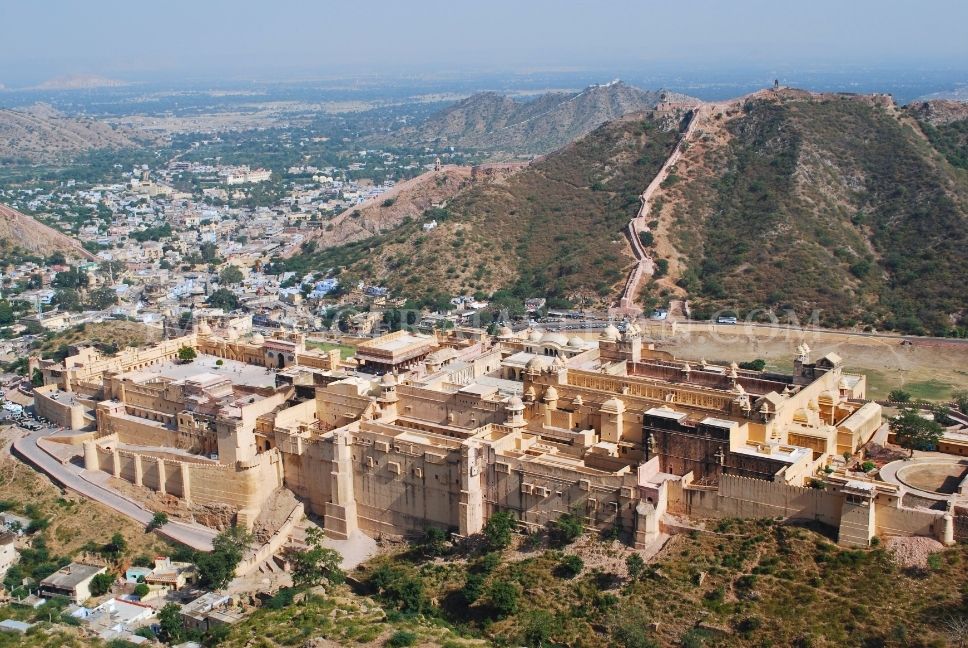
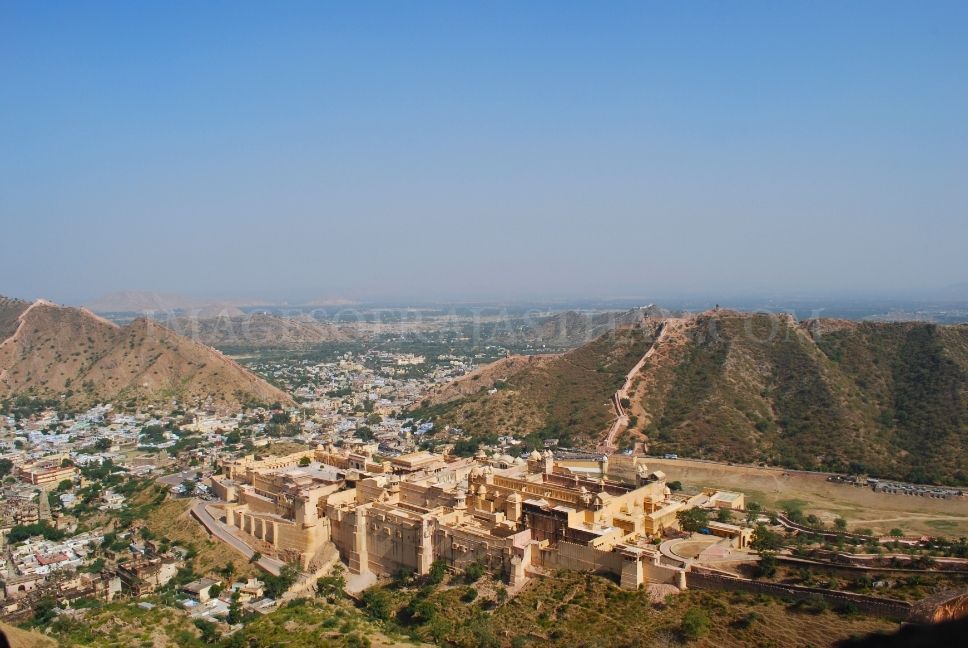
Located high on a rugged hill in Amer just 11 kilometers (6.8 mi) from the main city of Jaipur the Amer Fort, popularly known as Amber Palace, stands as the principal and most magnificent tourist attraction in Rajasthan’s capital a celebrated testament to the region’s rich history, architectural brilliance and strategic military importance having been the capital of the leading Kachwaha clan from 1037 until the shift to Jaipur in 1728. This sprawling Rajput stronghold known for its artistic style elements, large ramparts and series of gates along cobbled paths dramatically overlooks the serene Maota Lake, which historically served as the main water source for the palace complex further enhancing its strategic and aesthetic appeal. The construction of the fort began in 1592 under the rule of Raja Man Singh I a trusted general and one of the Navratnas in the court of Mughal Emperor Akbar and it was subsequently expanded and improved by successive rulers most notably Raja Jai Singh I in the early 1600s with additions continuing over the next 150 years until the Kachwaha clan shifted their capital to Jaipur during the time of Sawai Jai Singh II in 1727. Built primarily of pale yellow and pink sandstone complemented by white marble the opulent palace is a grand and comprehensive example of traditional Rajput architecture seamlessly fused with Islamic Mughal influences a hybrid style that defines its lavishness, intricate detailing and overall appeal which ultimately led to its recognition as a UNESCO World Heritage Site in 2013 as part of the group known as the Hill Forts of Rajasthan.
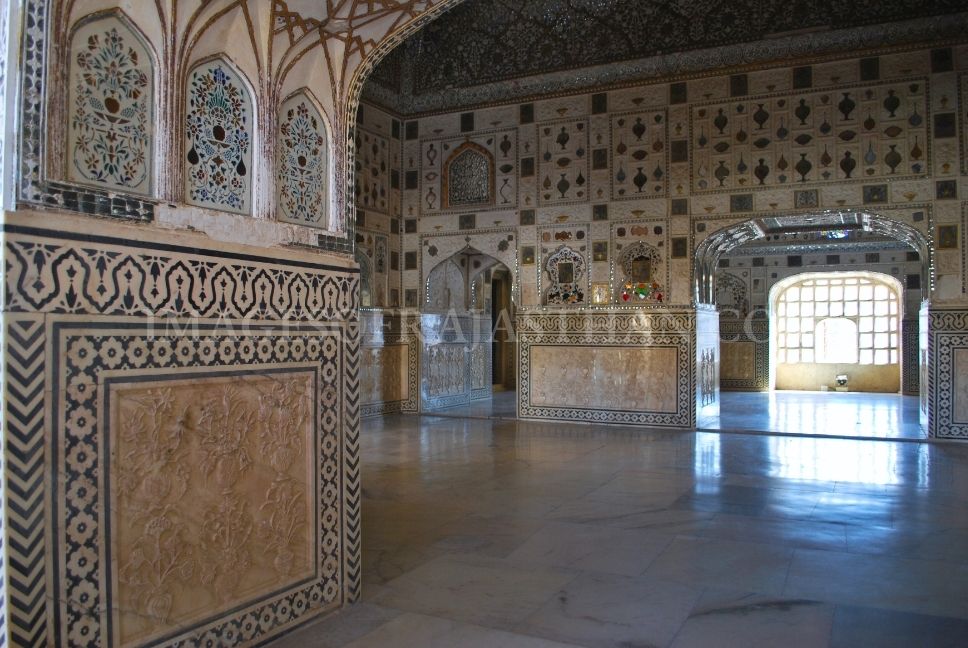
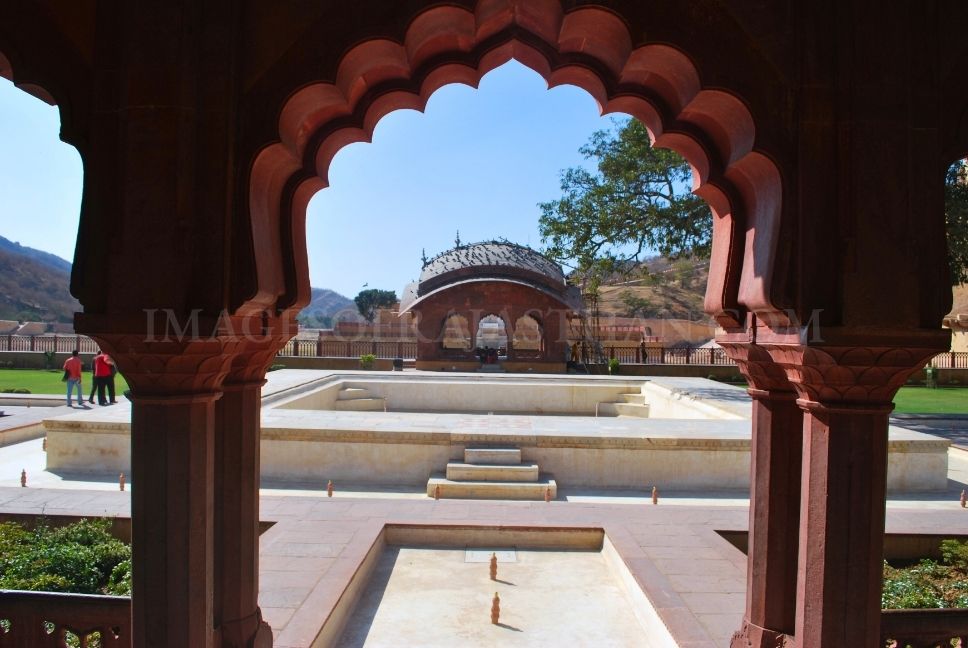
The palace itself is thoughtfully laid out across four main levels, each opening into its own magnificent courtyard with the main entry being through the imposing Suraj Pol or Sun Gate, which faces east towards the rising sun and was reserved exclusively for royal cavalcades and dignitaries, leading directly to the first main courtyard, the Jaleb Chowk—an Arabic phrase meaning a place for soldiers to assemble which historically served as the parade ground for the Maharaja’s personal bodyguards and where returning armies displayed their captured bounty to be witnessed even by the royal womenfolk through latticed windows. Beyond this initial courtyard lies the spectacular palace complex encompassing the Diwan-e-Aam, or “Hall of Public Audience,” an expansive hall where the king met with the general public to hear their concerns and aspirations; the Diwan-e-Khas, or “Hall of Private Audience,” reserved for confidential private meetings and important discussions; and the private royal residential quarters. The most celebrated chambers include the Sheesh Mahal (Mirror Palace), also known as Jai Mandir, an exquisitely decorated hall adorned with thousands of tiny mirror pieces that are strategically placed on the walls and ceilings to create a dazzling kaleidoscopic display when illuminated by even the smallest candle or ray of light and the Sukh Niwas (Hall of Pleasure), ingeniously designed with an ancient, sophisticated air-cooling system utilizing water-supplied pipes where cool winds were blown over a water cascade within the palace creating a remarkable air-conditioned ambiance centuries ahead of its time.
The Zenana or women’s quarters reveals insights into the royal family’s structure with Raja Man Singh having built twelve separate rooms, one for each of his twelve queens all interconnected by a private staircase only to the King’s room demonstrating the prevailing purdah system while Raja Jai Singh later built a single large room for his sole queen equal in size to three of the old queen’s rooms. Notably at the entrance near the fort’s Ganesh Gate there is the Temple of Shila Devi, dedicated to a Goddess of the Chaitanya cult whose idol was gifted to Raja Man Singh after his victory over the Raja of Jessore in Bengal in 1604, making it a place of important religious significance. Furthermore, Amer Fort is historically linked to the adjacent Jaigarh Fort, located immediately above it on the Cheel ka Teela (Hill of Eagles) of the same Aravalli range with the two structures being connected by a subterranean passage a critical feature meant as an escape route in times of war to enable the royal family members to shift to the more redoubtable Jaigarh Fort, a restored section of which is now open to the public. The fort complex attracts a vast number of tourists daily with visitation reported at 5000 visitors a day who come to witness the grandeur, explore the vast complex and experience the popular light and sound show in the evening which vividly narrates the fort’s rich history and the glorious Rajput culture against its imposing walls.
Quick Overview
The magnificent Amer Fort, also known as Amber Palace, is a UNESCO World Heritage Site and Jaipur's premier tourist destination. Built of red sandstone and marble, this 16th-century Rajput stronghold beautifully overlooks the Maota Lake. It is famed for its artistic blend of Rajput and Mughal architecture, housing the opulent Sheesh Mahal (Mirror Palace) and the naturally air-conditioned Sukh Niwas. Connected by a tunnel to Jaigarh Fort, Amer embodies centuries of royal history. Visitors are drawn to its stunning ramparts, historic courtyards, and the dramatic evening light and sound show.