
About Galta Ji Temple
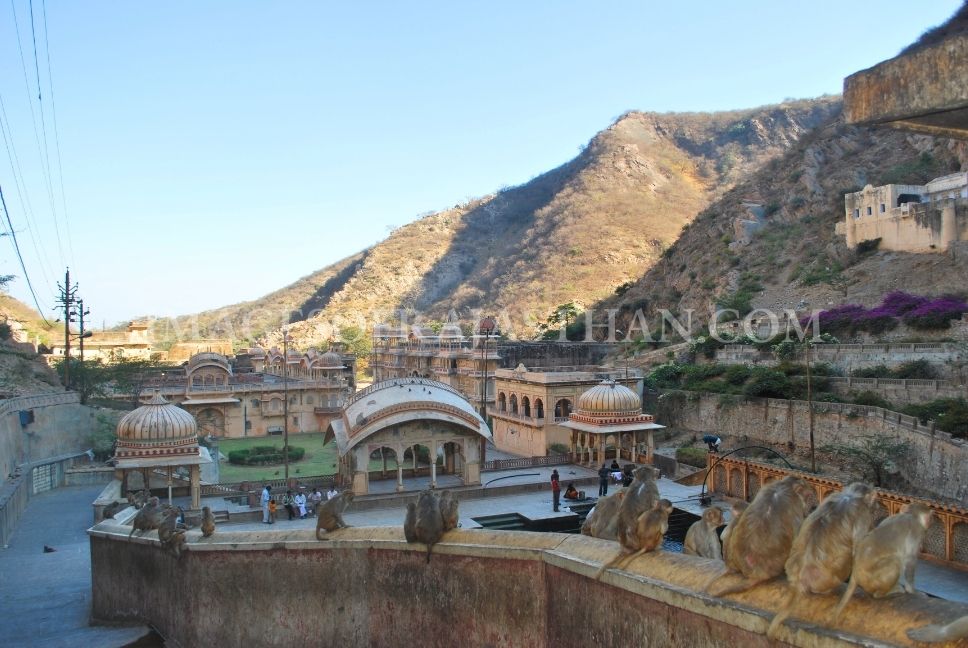
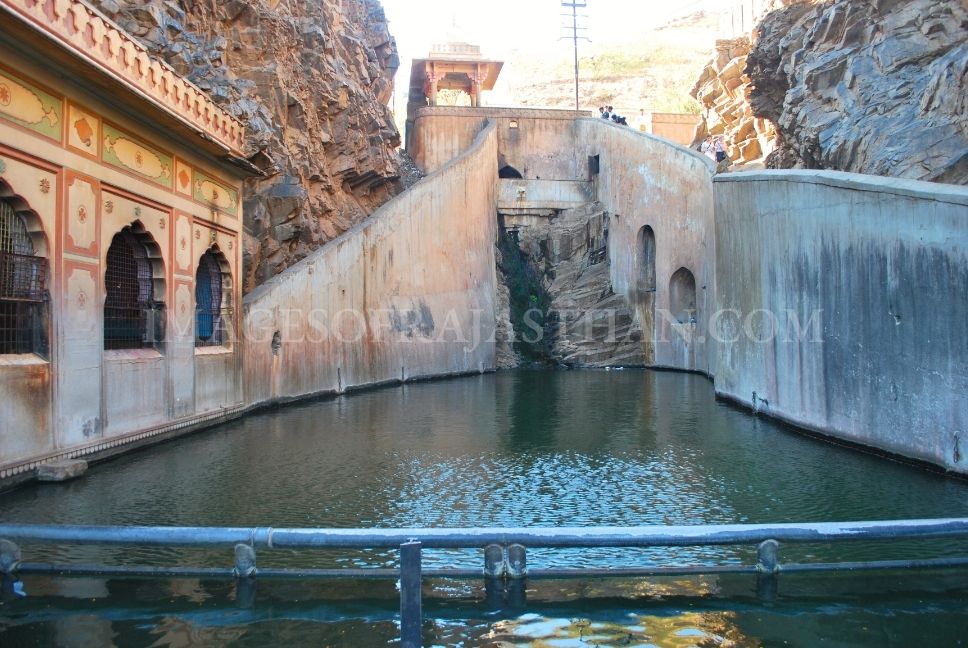
Galtaji is an ancient and profoundly significant Hindu pilgrimage site and temple complex located approximately 10 kilometers east of Jaipur, nestled within a narrow picturesque crevice in the ring of rugged Aravalli hills that surround the Pink City offering an exquisite blend of natural beauty, architectural grandeur and spiritual tranquility. The site owes its sacred status to a powerful local belief that the saint named Rishi Galav lived here for centuries, engaging in severe meditation and performing penance (tapasya), which resulted in the gods blessing this specific location with an abundant and perennial water flow, a feature that continues to astound visitors in the otherwise arid region. The heart of the Galtaji complex is this natural spring, which emerges high on the hill and flows continuously downward filling a series of seven sacred kunds (water tanks), most notably the revered Galta Kund, which is believed never to dry up drawing devotees from far and wide to partake in the sacred rituals particularly during the major Hindu festival of Makar Sankranti (usually in January).
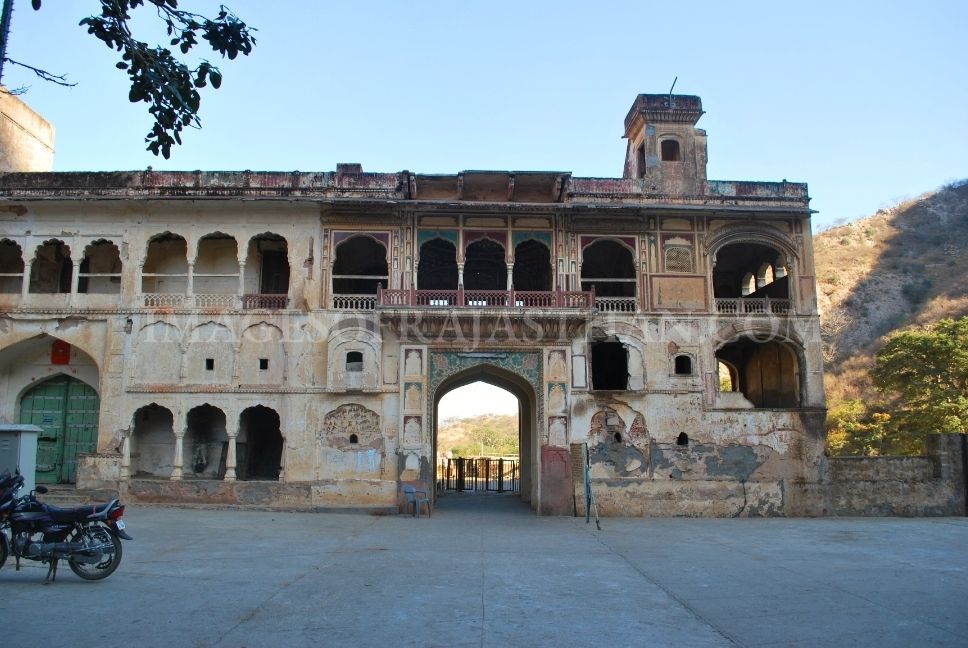
The present architectural structure of the temple complex which many note resembles a grand palace rather than a traditional temple was primarily constructed in the 18th century by Diwan Rao Kriparam, a prominent courtier of Maharaja Sawai Jai Singh II though the site has been a spiritual hub tracing back to the early 15th century. Architecturally, the Galtaji Mandir features a striking and successful blend of traditional Rajasthani and Mughal styles built predominantly from the local pink sandstone with numerous beautifully integrated pavilions topped with rounded roofs intricately carved stone pillars and remnants of colorful frescoes that enhance the spiritual and aesthetic experience of visitors. Historically, Galtaji is extremely important as it was Northern India’s first Vaishnava Ramanandi Peeth, serving as a crucial retreat and center for Hindu ascetics belonging to the Ramananda Sampradaya (sect) of Shri Ramanand; the site was traditionally occupied by yogis until the influential Ramanandi saint, Payohari Krishnadas, arrived in the early 15th century, replaced the earlier yogis, and became head of the Galta gaddi, from which the sect’s influence spread widely across India. Within the complex visitors find various shrines dedicated to deities like Krishna, Rama and Hanuman, as well as the shrine of Goswami Nabha Das Ji, a respected Ramanandi saint who once met Tulsidas, the famed author of the Ramcharitmanas at this very dham.
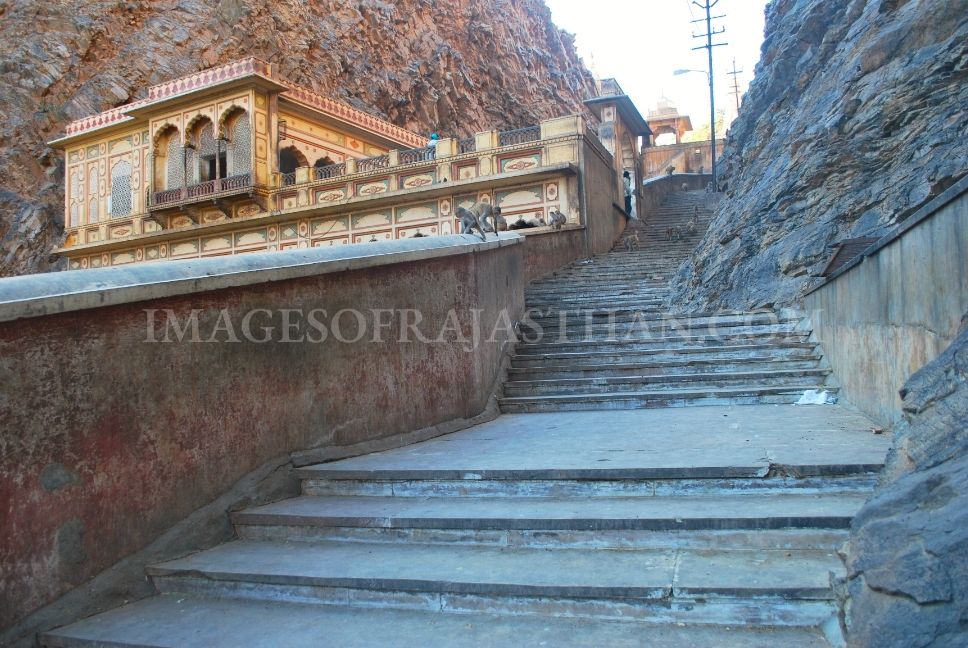
The Galtaji complex is famous worldwide for its charismatic and abundant residents a large population of rhesus monkeys and langurs who are often seen bathing and playing in the holy kunds or accepting food from pilgrims antics that have earned the site the whimsical but unforgettable nickname of the “Monkey Temple” or “Monkey Palace” among tourists. Visitors can ascend the crevasse, continuing past the numerous water pools which also include the Ram Kund and Sita Kund, to reach the spectacularly situated Surya Mandir (Sun God Temple) perched dramatically above the tanks on the ridgetop overlooking Jaipur. This vantage point commands incredible panoramic views of the entire Jaipur city below and its historic fortifications a stiff but rewarding thirty-minute climb for those starting from the eastern edge of the Pink City’s Suraj Pole gate. The site remains a vibrant hub of asceticism deeply tied to both the Vaishnava tradition and the natural landscape of the Aravallis, offering a unique blend of nature, history, architecture and spiritual life that makes it a must-visit destination.
Quick Overview
Galtaji Temple, the "Monkey Temple," is an ancient 16th-century Hindu pilgrimage site located in the Aravalli hills outside Jaipur. It is famed for its series of sacred kunds (water tanks) continuously fed by a natural perennial spring, believed to be the reward for Rishi Galav's penance. The temple complex, built like a grand palace in pink sandstone, is a historically vital center of the Ramananda Vaishnava sect. Its unique blend of Rajasthani and Mughal architecture is integrated into the mountain pass. Visitors are drawn by its spiritual significance, historical temples, and the large, playful population of rhesus monkeys.